Research
Summary
My research centers on giant planet formation and evolution, with particular focus on addressing:
- Circumplanetary disk properties, including composition and lifetime
- Timescale and mechanism of gas accretion onto the central planet
- The intersection of accretion and circumplanetary disk properties with HST and JWST
- Connections between brown dwarfs/free-floating planets and their bound counterparts
Projects
Wide-Orbit Planet SR 12 c: The Broadest-Wavelength Coverage SED of a Giant Planet
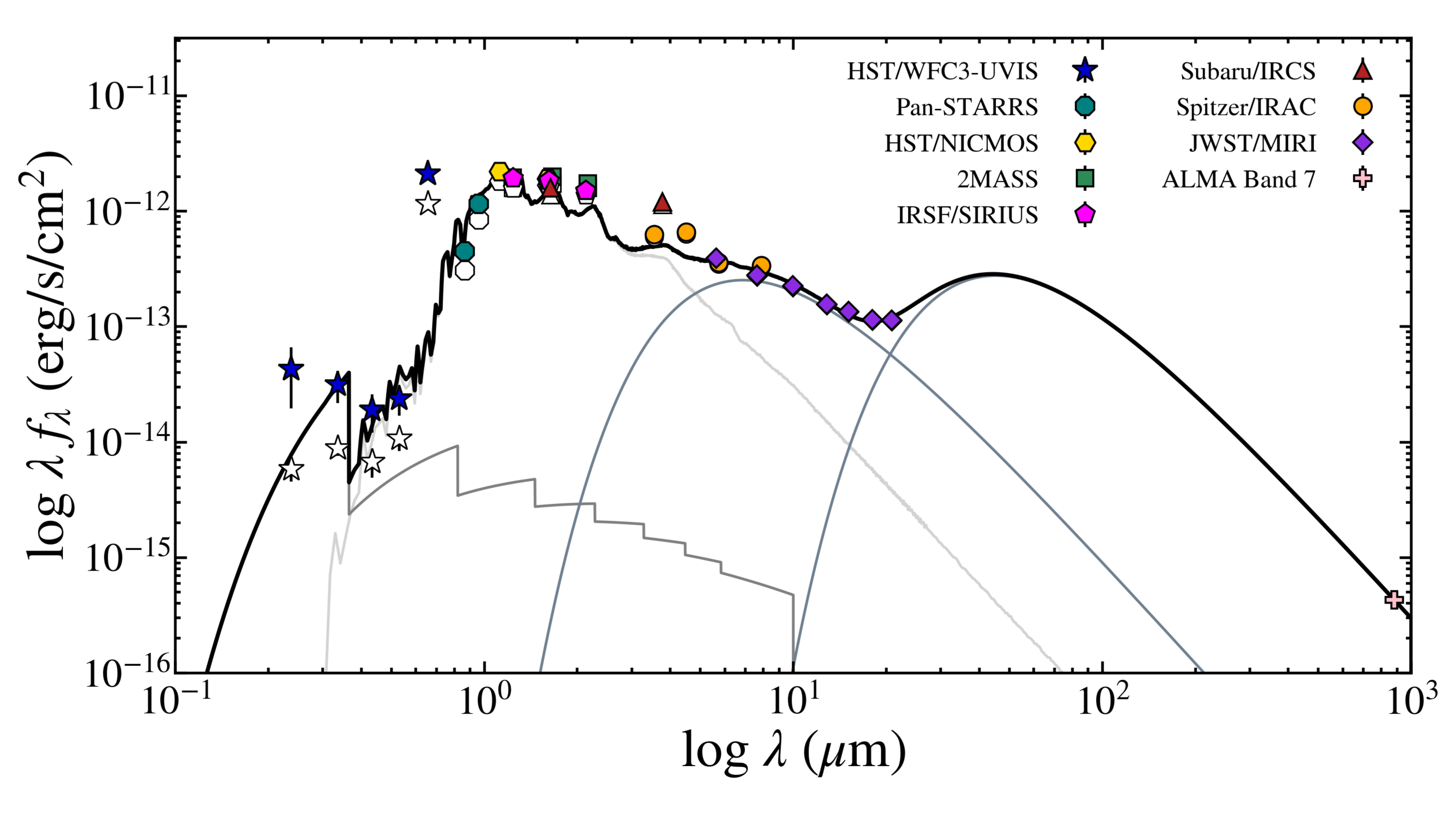
Many of the details of giant planet formation and evolution remain untested as there are few observational constraints on when gas giants grow through gas accretion. In my recently-submitted paper, we present new 0.2-0.7 µm UV-through-red optical imaging of the young (~2 Myr), wide-orbit planetary-mass companion SR 12 c from the Wide Field Camera 3 (WFC3) on board the Hubble Space Telescope. SR 12 c exhibits strong accretion-related continuum excess blueward of ~5000 Å and clear signs of the Balmer jump at 3646 Å. Modeling this excess with hot hydrogen slab models, we derive a total accretion luminosity and a mass accretion rate. Based on its mass of ~13 MJup and age of 2 Myr, SR 12 c must have had a past accretion rate that was on average several orders of magnitude higher; it is now at the end stages of assembly. No accretion variability is evident over the month-long baseline of the WFC3 observations, but the Hα emission line strength decreases by 90% compared to the reported flux from five years earlier. We assemble the most complete spectral energy distribution of a young giant planet to date (above), spanning the UV through sub-mm wavelengths (0.2-880 µm). This adds SR 12 c to the small yet growing sample of planets with detailed accretion and disk constraints, which together are beginning to establish the diversity of timescales and physical processes governing the formation of giant planets.
Synthesizing Accretion and Circumplanetary Disk Properties for a Sample
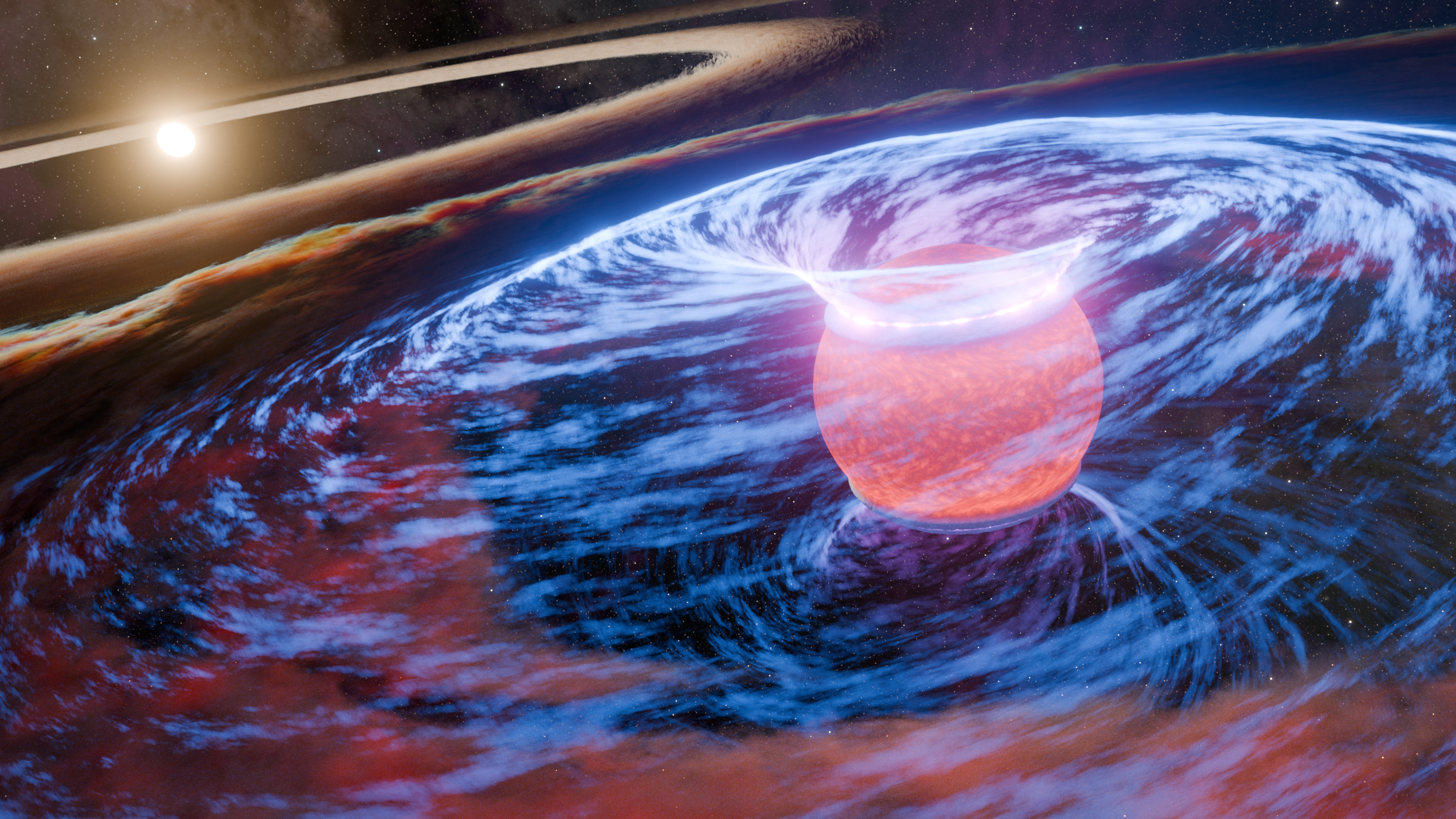
Over the past few years, there have been a handful of detections (<10) of circumplanetary disks (CPDs), with a reported disk fraction of around 50% for long period planets. However, many of their basic properties remain poorly constrained. We have ~50 years of studies building a comprehensive understanding of circumstellar/protoplanetary disk physics and dissipation timescales, as well as accretion properties, but all of these areas are understudied in the planetary-mass regime. To remedy this, we launched a program with the goal of understanding the diversity of accretion and CPD properties across a range of ages and masses, and whether there is any correlation between accretion and disk properties. This program will place the first constraints on a population of planets and CPDs in a uniform framework. I am leading this effort for my PhD thesis work, levying our sample of UV observations from Cycle 28 HST GO 16302 and mid-IR observations from Cycle 1 JWST GO 2311.
Parent Volatile Composition of Comet 41P/Tuttle-Giacobini-Kresák
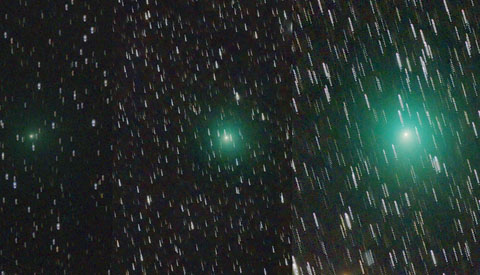
- As some of the oldest and best-preserved remnants from the formation of the solar system, comets, and in particular their volatile compositions, can provide unique insights into how the physics and chemistry operated in the protoplanetary disk mid-plane during planet formation. However, many of the comets observed to date with infrared spectroscopic techniques sensitive to volatile emissions tend to be Oort Cloud Comets (OCCs), whereas the less active Jupiter-Family Comets (JFCs) remain underrepresented in the current taxonomy. In 2017, a unique opportunity to study several JFCs presented itself, one being 41P/Tuttle-Giacobini-Kresák (41P hereafter). During my 2021 internship with NASA Goddard Space Flight Center, I analyzed observations of 41P obtained with the NIRSPEC instrument on Keck II. I derived production rates and mixing ratios for several major hydrogen and carbon-based volatile species in 41P and compared to previous near-IR studies, finding relative enrichment of C2H6 (ethane) and depletion of H2CO (formaldehyde). This variation between agreement with average JFC abundances and average OCC abundances indicates that there may have been very efficient hydrogenation reactions on the dust surface in the location where 41P formed, complicating the picture of the comet's formation history. This paper (Finley et al. 2026b) is currently in preparation to be submitted to the Planetary Science Journal (PSJ).
Observing Programs
As Co-Investigator
Cycle 33, GO 18139
PI Jiang: "Tracing Accretion in the Planetary Regime: A Comprehensive UV/Optical Survey of the Late Stages of Planet Formation"
60 orbits awarded
Cycle 34, GO 18436
PI Jiang: "Imaging Six Young Planetary-Mass Companions with HST/WFC3-UVIS"
12 orbits awarded
Cycle 4, GO 7538
PI Cugno: "Giants in the making: the composition of circumplanetary disks with JWST MIRI-MRS"
59.2 hours awarded
Cycle 4, GO 9091
PI Morgan: "Imaging a Hidden Super-Jupiter Accelerating its Metal-rich M-dwarf Host"
16.1 hours awarded
